1. The Chemical Metallurgy of Silver & Gold Tarnishing
Fine jewelry made of 925 sterling silver consists of 92.5% pure silver alloyed with 7.5% copper (added for structural tensile strength). While pure gold and platinum are chemically inert, silver and copper have high chemical affinities for sulfur:
// Primary Silver Tarnishing Reaction:
2 Ag + H₂S + ½ O₂ → Ag₂S (Silver Sulfide, Black) + H₂O
// Secondary Copper Alloy Oxidation:
2 Cu + H₂S → Cu₂S (Copper Sulfide, Brownish-Black) + H₂
Silver sulfide (Ag₂S) is a black, insoluble crystal lattice that dulls high-mirror finishes, alters gemstone prong luster, and creates customer chargebacks when a buyer unboxes a tarnished piece. In the presence of ambient humidity and trace atmospheric gases, this reaction normally takes months. However, the wrong packaging material compresses this timeline into days.
2. The Three Hidden Sources of Sulfur in Factory Packaging
Why do $0.20 wholesale pouches from generalist platforms trigger rapid oxidization?
Acidic Cardboard & Lignin
Recycled paper inserts contain residual wood lignin and acid bleaching sulfates. Inside sealed mailers, they continuously release sulfur dioxide (SO₂), creating an acidic micro-environment.
Animal & Dextrin Glues
Low-cost envelope pouches use sulfur-containing bone glue or synthetic solvent adhesives to bind outer flaps. Heat in international cargo holds accelerates adhesive degassing directly onto precious metals.
Sulfur Dye Catalysts
Cheap synthetic velvets and brushed fleece use crude sulfur dyes and vulcanized rubber elastic threads. These materials release trace sulfide ions upon contact with natural humidity.
3. Understanding the ASTM B809-95 Standard
In fine jewelry and aerospace electronics, the internationally recognized gold standard for sulfur corrosion resistance is ASTM B809-95 (Standard Test Method for Porosity in Metallic Coatings by Humid Sulfur Vapor):
ASTM B809-95 Laboratory Protocol:
- Chamber Temperature: Constant 50°C ± 1°C (122°F).
- Relative Humidity: 85% ± 5% saturated aqueous potassium nitrate solution.
- Sulfur Source: Pure flowers of sulfur suspended above the specimen without direct contact.
- Exposure Duration: 48 continuous hours (simulating 24 months of ambient retail exposure).
- Pass/Fail Criteria: 40× optical microscopy inspection for silver sulfide formation, surface pitting, or metallic discoloration.
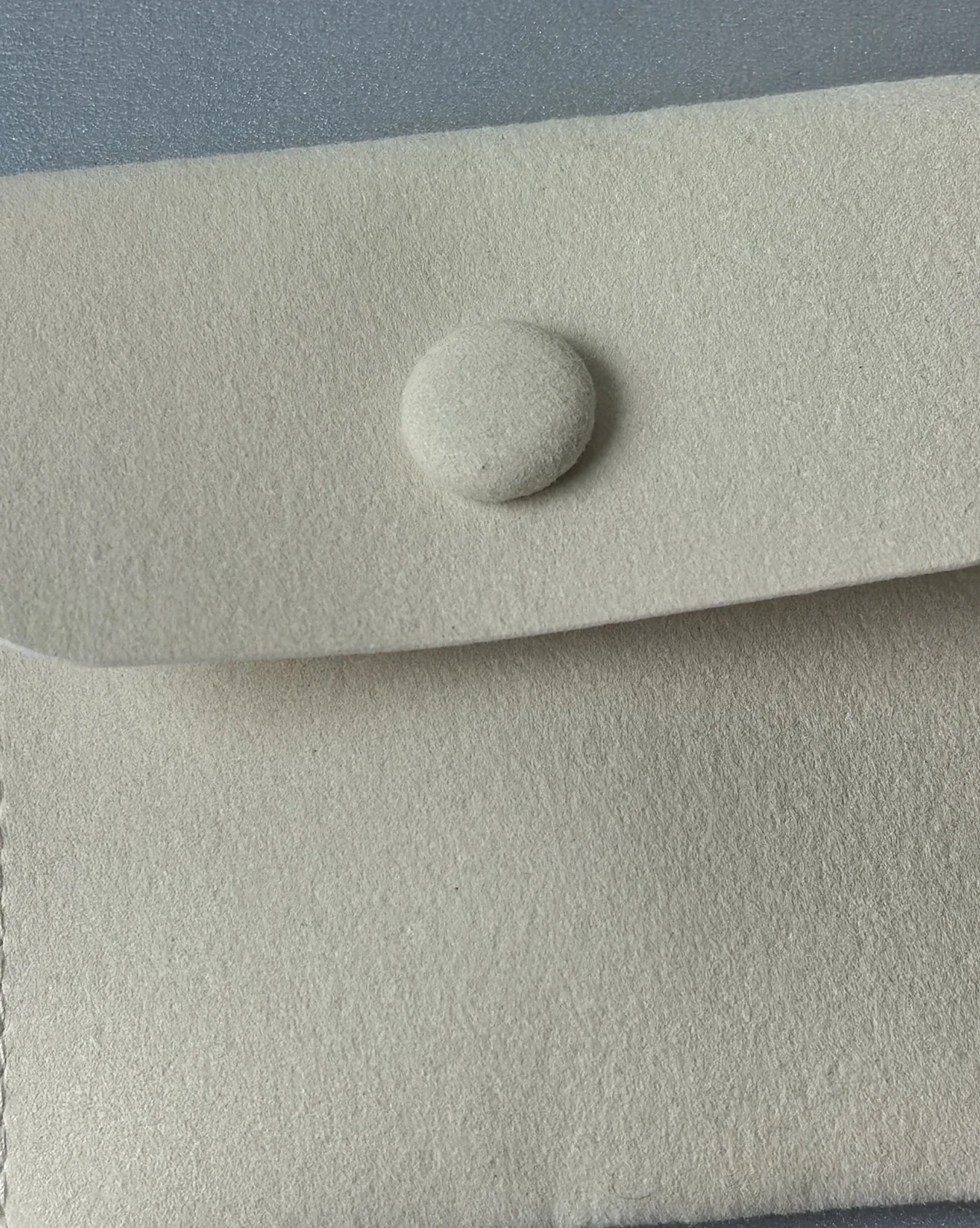
Atelier Pouch's 320 GSM dual-face composite microfiber suede and 400 GSM Italian plush velvet are certified to pass ASTM B809-95 with zero tarnish crystallization, preserving 925 sterling silver, 18K solid gold, vermeil, and platinum in pristine condition.
4. Packaging Material Safety Comparison Matrix
Compare the chemical and physical characteristics of common jewelry packaging textiles:
| Material Substrate | Sulfur Content | pH Level | Prong Snag Risk | Anti-Tarnish Rating |
|---|---|---|---|---|
| Atelier Pouch 320 GSM Microfiber | 0.00% (Certified Sulfur-Free) | 7.0 (Neutral) | Zero (Dense Planar Pile) | Museum-Grade (ASTM B809-95) |
| Atelier Pouch 400 GSM Italian Velvet | 0.00% (Purified Dye) | 6.8–7.0 (Neutral) | Ultra-Low (Ultrasonic Edges) | Boutique-Grade (2+ Years) |
| Generic 1688 Brushed Fleece | Trace Sulfides Present | 5.0–5.5 (Acidic Bleach) | Moderate (Fuzzy Fluff) | Poor (Tarnishes in 2–4 Weeks) |
| Standard Unbleached Cotton / Linen | Low to Moderate | 6.0–6.5 (Mildly Acidic) | Moderate (Rough Coarse Fibers) | Fair (Porous to Ambient Air) |
| Plastic Organza Sheer Bags | Synthetic Neutral | Neutral | High (Coarse Mesh Catches Prongs) | Zero Protection (Full Air Exposure) |